Buy a home now, build wealth & thank yourself later
You'll thank your past self for buying your first home sooner. Homebuyers who start young grow more worth & are better set for retirement.
Current Events, Personal Finance, First-Time Homebuyer, Buying a Home, Home Ownership


An Urban Institute study shows that buying your first home before age 35 could leave you better prepared for retirement by the age of 60. Within the data set, the Institute surveyed homeowners who turned 60 or 61 from 2003 to 2015.
Early-life beats later-life homebuying
Here's what the study found:
"Today's older adults became homeowners at a younger age than today's young adults. Half the older adults in our sample bought their first house when they were between 25 and 34 years old. And 27 percent bought their first home before age 25."
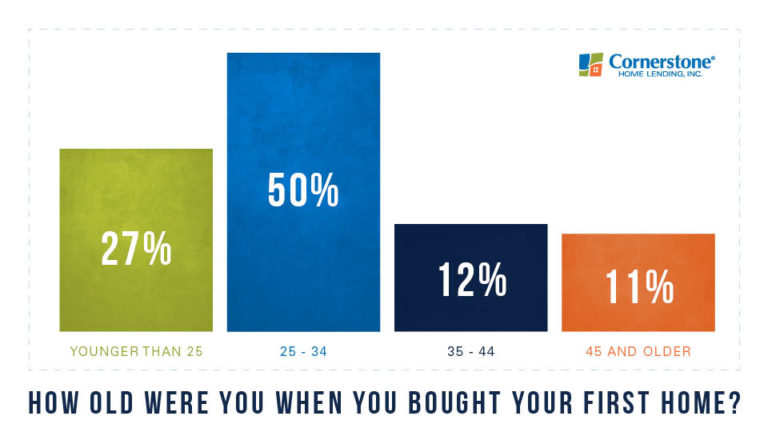
This study highlights the major impact of purchasing a home earlier in life.
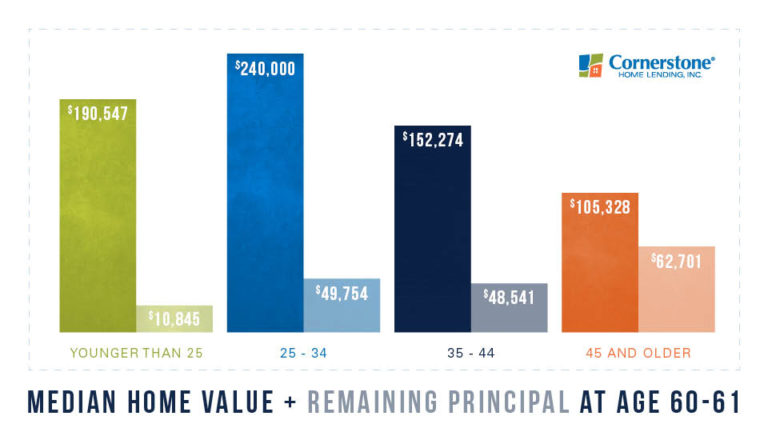
The homeowners who bought their first house before they turned 25 had just $10,000 on average remaining on their mortgage by age 60. And the 50 percent of homeowners who purchased in their twenties to early thirties had about $50,000 remaining. Though, it's important to note that these buyers typically purchased more expensive houses.
The Federal Reserve's latest findings show that, within the first three months of this year, net worth for U.S. households rose by $960 billion solely based on the value of real estate owned. CoreLogic confirms $33,400 to be the average homeowner's annual home equity gain.
Compare the advantage of younger buyers to the homeowners who purchased later and had less opportunity to build equity over time. Homeowners in the 45 and older age group had an average of over $62,000 left on their mortgage as they neared retirement.
Housing experts have expressed concern that the millennial homeownership rate, for adults ages 21 to 40, is significantly lower than previous generations within the same age bracket.
But the Urban Institute's study results may motivate millennials on the fence about buying their first house or signing another lease:
"As people age into retirement, they rely more heavily on their wealth rather than their income to support their lifestyles. Today's young adults are failing to build housing wealth, the largest single source of wealth, at the same rate as previous generations.
While people make the choice to own or rent that suits them at a given point, maybe more young adults should take into account the long-term consequences of renting when homeownership is an option."
Finance experts have said millennials could build up to 40 times more worth by buying instead of renting. While it's typical for many millennials to put off marriage and children until their thirties in favor of pursuing education and a career, millennials are expected to drive the housing market as more begin to marry and start families. The real estate market is currently seeing the signs of this.
When buying a house in today's competitive market, does affordability present a problem? Not necessarily.
As First American's Deputy Chief Economist Odeta Kushi explained:
"Once you include the equity benefit of price appreciation, owning made more financial sense than renting in 48 out of the 50 top markets, with the only exceptions being San Francisco and San Jose, Calif."
Skyrocketing home values have caused some to question this. Many critics point out that houses are costlier today than they were last year. A recent Black Knight study on historical national payment-to-income ratios — analyzing the portion of median income required to make monthly mortgage payments on a median-priced home — found the average for the past 25 years to be 23.6 percent.
For the past five years, the average was 20.1 percent. Today's average sits at 20.5 percent. And so, housing payments are currently marginally less affordable — by less than half a percentage point — than the average for five years. Yet, today's monthly mortgage payment is estimated to be substantially more affordable than the average for the last 25 years.
Owning a home is continually shown to be the cornerstone for building individual wealth. For most people in the U.S., their home is their most valuable asset. Starting your homeownership journey younger — as soon as you're able — can set you up for the greatest odds of financial success in the future.
Current Events, Personal Finance, First-Time Homebuyer, Buying a Home, Home Ownership